
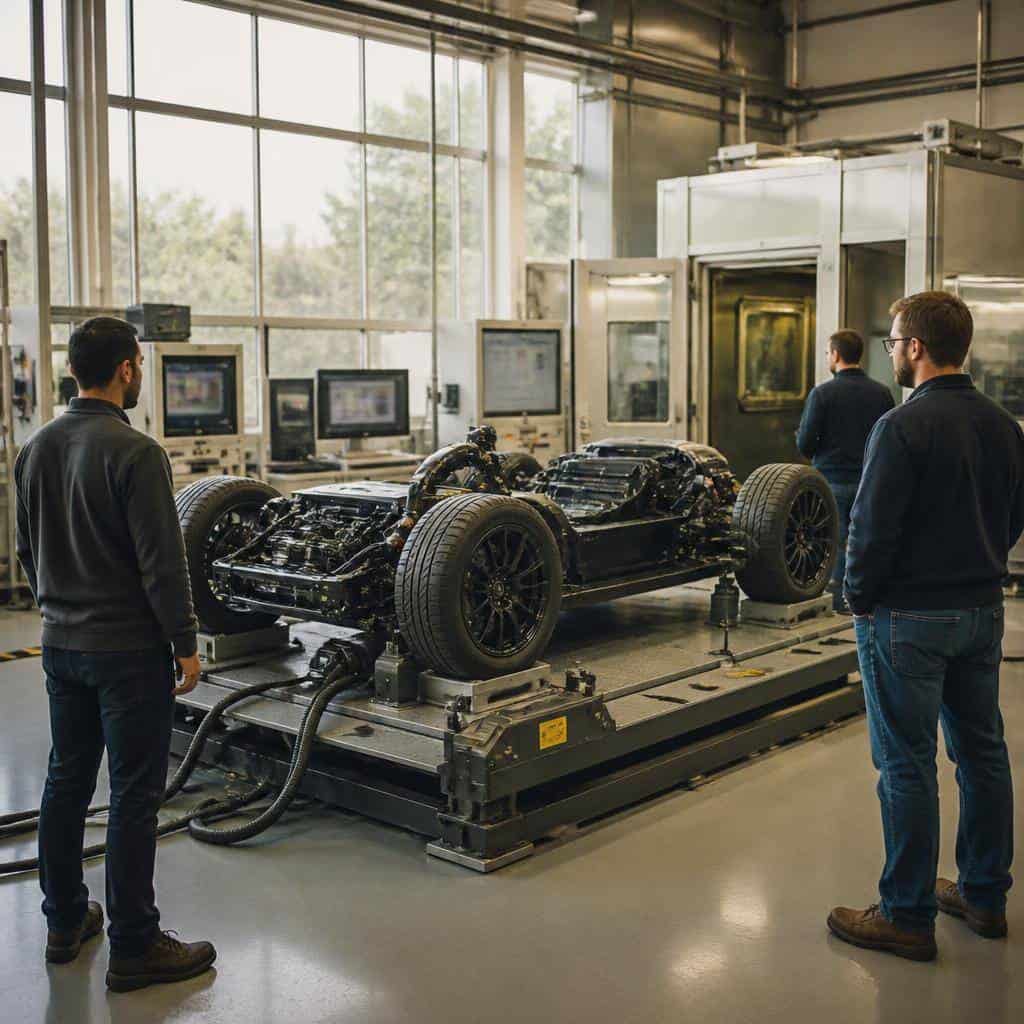
Automotive testing is the key process that bridges the gap between vehicle design and real-world performance. It ensures that every car on the road meets safety, reliability, and regulatory standards before it reaches customers. From controlled laboratory experiments to challenging road scenarios, automotive testing systematically evaluates how vehicles perform under various conditions.
Why Automotive Testing Matters for the Industry
In the automotive sector, testing isn’t just about ticking boxes. It helps manufacturers identify potential failures early, improve design, and comply with strict safety regulations. The process minimizes costly recalls and supports the creation of vehicles that drivers can trust. Additionally, automotive testing provides data that supports innovation in fuel efficiency, emissions control, and new technologies like autonomous driving systems.
Key Phases of Vehicle Evaluation
Laboratory Testing
This initial phase takes place in controlled environments, where engineers can precisely measure vehicle components and systems. Lab testing evaluates:
- Engine performance: Measuring output, fuel consumption, and emissions using dynamometers.
- Material durability: Stress and fatigue testing of parts and assemblies.
- Electronic system functionality: Verifying software and hardware integration.
Lab setups simulate conditions that are difficult to reproduce on the road, enabling repeatable and safe testing for system refinement.
Simulated Environmental Tests
Vehicles undergo rigorous environmental simulations to assess how they withstand temperature extremes, humidity, corrosion, and vibration. These tests ensure that parts won’t fail prematurely when exposed to harsh weather or rough terrain.
On-Road Testing: Putting Vehicles to the Real-World Test
Once vehicles pass laboratory assessments, they graduate to road tests. This phase exposes them to actual driving conditions, revealing how they behave with real drivers on different road surfaces and traffic environments.
- Performance handling: Testing acceleration, braking, and cornering on test tracks.
- Fuel economy: Measuring consumption under varied driving patterns.
- Noise, vibration, and harshness: Assessing cabin comfort during operation.
- Safety verification: Evaluating crash avoidance systems and active safety features in traffic scenarios.
Criteria for Choosing an Effective Testing Approach
When planning automotive evaluations, manufacturers consider factors like:
- Testing scope: Component level, system integration, or full vehicle.
- Regulatory requirements: Ensuring compliance with regional safety and emissions standards.
- Budget and timeline: Balancing cost-efficiency with thoroughness.
- Technological focus: Prioritizing electric vehicles, hybrids, or traditional combustion engines.
Many automotive companies partner with specialized labs that offer comprehensive solutions to cover these criteria efficiently.
Reliable Resources for Comprehensive Automotive Testing
Finding a partner for automotive testing involves evaluating their testing capabilities, expertise, and compliance with international standards. Trusted laboratories offer a range of services from mechanical testing to advanced electronics validation and road trials.
Exploring options with a focus on integrated testing processes can streamline development cycles and produce robust results. For example, the offering of automotive testing services covers both lab and on-road phases, helping companies ensure quality and safety through every stage.
Challenges in Automotive Testing and How to Address Them
One major challenge is replicating the vast range of real-world driving conditions in tests. Weather variability, driver behavior, and traffic diversity make it difficult to predict every scenario. To counter this, combining lab simulations with extensive field testing provides a balanced understanding.
Another issue is integrating new technologies like ADAS (Advanced Driver Assistance Systems) and electrification. These require updated protocols and specialized equipment to verify performance and safety thoroughly.
| Testing Phase | Main Focus | Typical Methods |
|---|---|---|
| Laboratory Testing | Component durability and system function | Dynamometers, environmental chambers, material stress tests |
| Simulated Environment | Extreme weather and harsh conditions | Temperature cycling, corrosion baths, vibration platforms |
| Road Testing | Real driving performance and safety | Track testing, highway runs, city driving simulations |
Connecting Lab Data to Real-World Performance
The ultimate goal of automotive testing is to predict how vehicles behave once they leave the factory. Lab and simulated tests identify potential weaknesses early on, while road tests confirm durability and user experience. By integrating results from both, engineers can refine designs, adjust manufacturing processes, and ensure that every vehicle performs reliably under actual conditions.